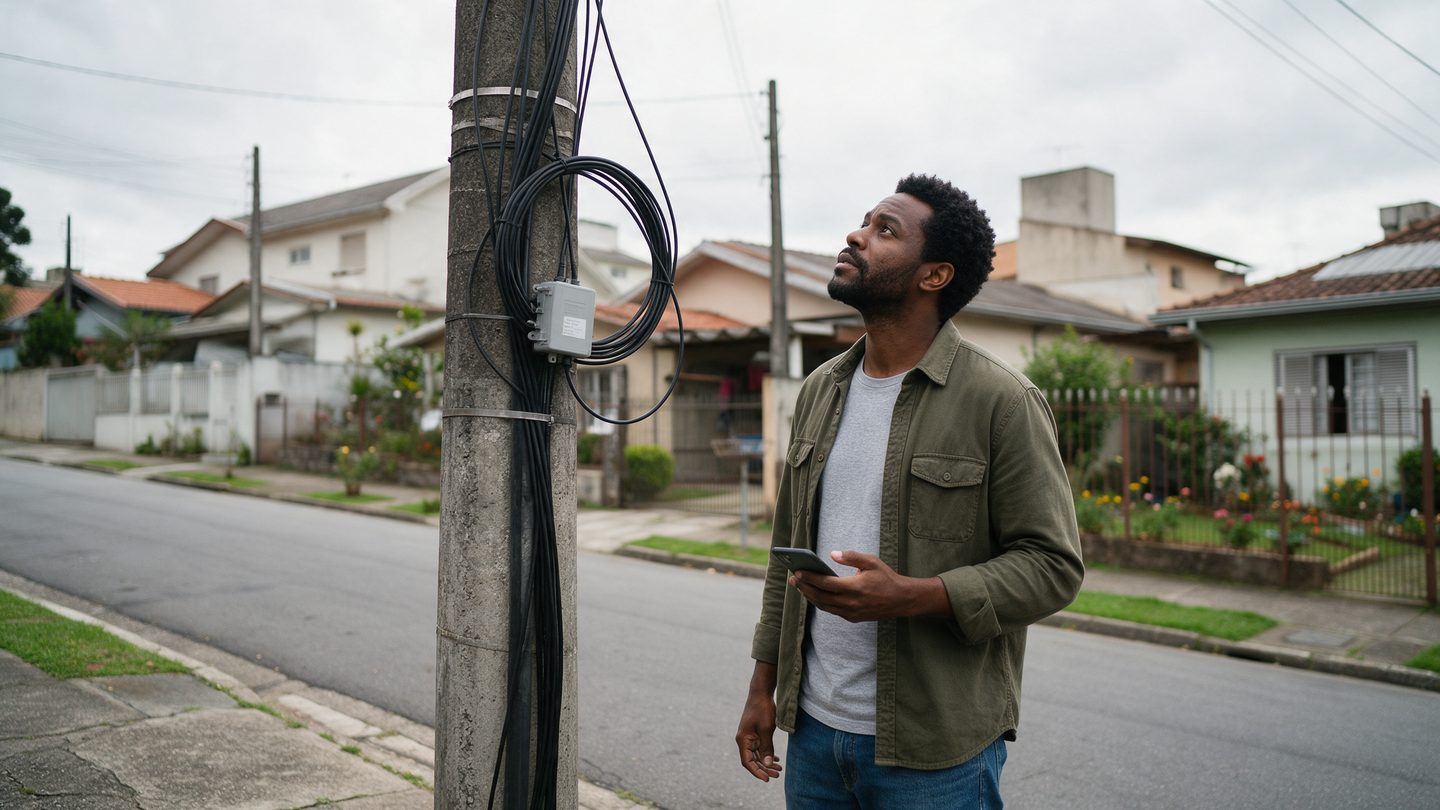
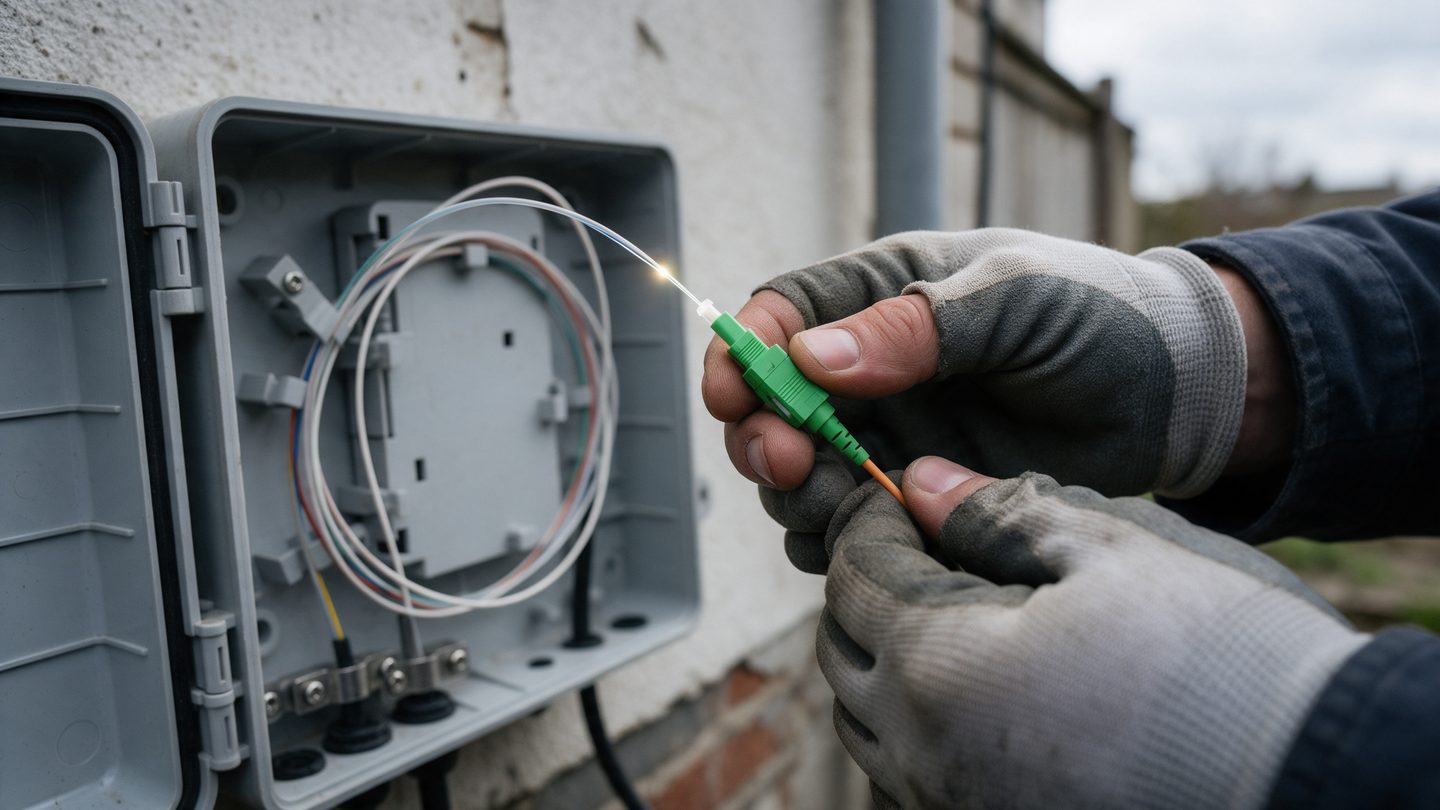
What changes between the three is the path the internet takes from the street to your home. That path decides how much the connection can handle and what gets in its way.
Radio internet
An antenna at your home talks to a tower owned by the provider. Heavy rain, a tree growing in front and a new building in the way weaken the signal, and speeds tend to be lower.
Copper cable internet
The signal travels as electricity through a copper wire, like the coaxial cable of old TV service or a phone line. Copper loses strength over distance and suffers from electrical interference, so people who live farther from the central office get less.
Fiber optic internet
The signal travels as light inside a glass strand thinner than a hair. Light has no electrical interference, keeps its strength in the rain and handles much higher speeds. That is why plans from 600 Mega to 1 Giga only exist on fiber.
What you notice day to day
- Stability. Fiber stays up in storms and holds steady when the neighbor turns on the electric shower
- Uploads. Sending videos, uploading files to the cloud and going live get much faster
- Latency. Response time is lower, and you notice it in video calls and online games
All Soma plans are 100% fiber optic, from the street cable to the equipment inside your home.