
Wi-Fi signal leaves the router in every direction, like a light bulb. Anything in the way absorbs part of it, especially brick walls, concrete slabs, mirrors, fish tanks and large appliances.
The four worst spots
- Inside a cabinet or closed TV stand. The wooden door already blocks part of the signal
- On the floor. Half the signal goes down and gets lost
- Behind the TV or near the microwave. A running microwave interferes with 2.4 GHz Wi-Fi
- In a corner of the house. The signal that goes through the outside wall is wasted
Where it works best
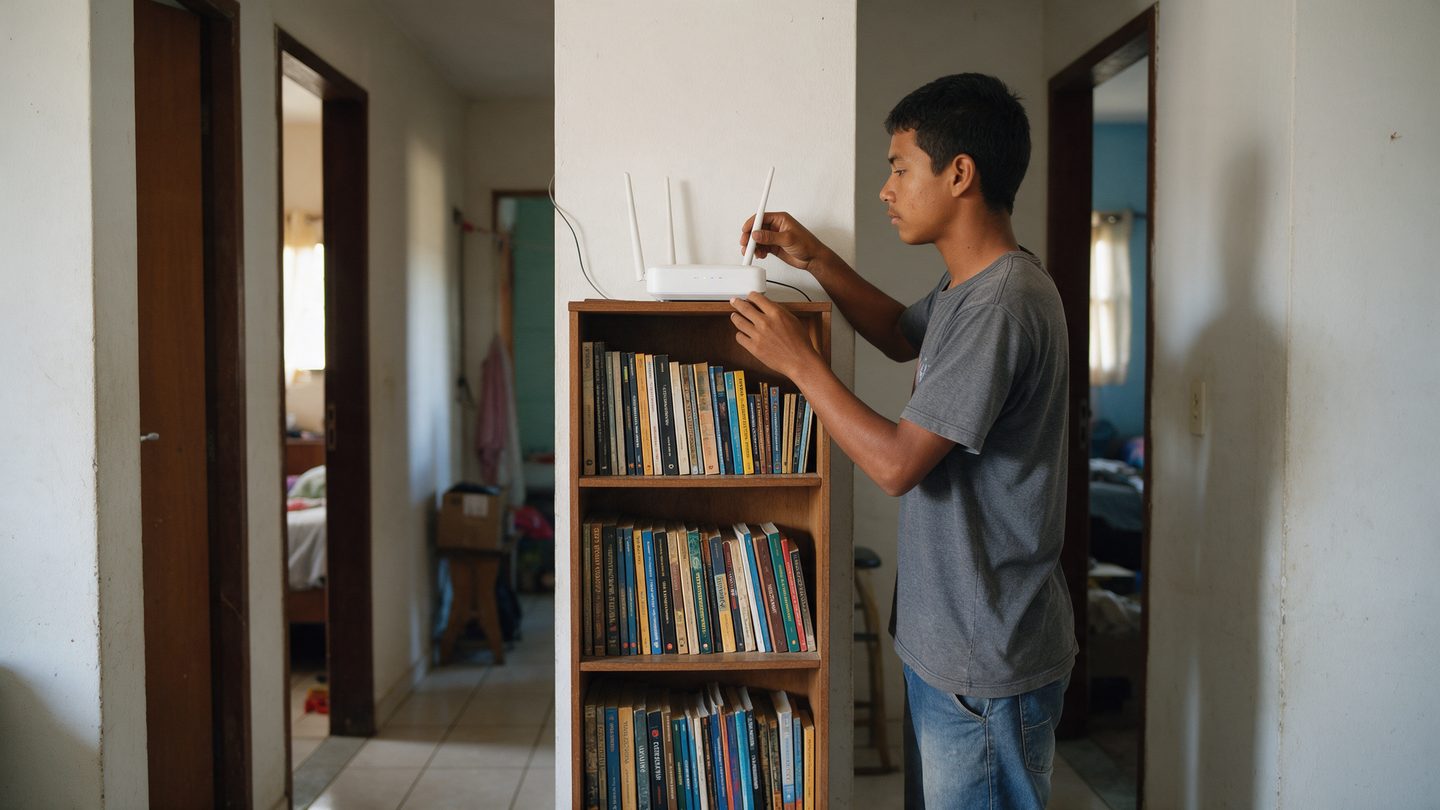
In the middle of the house, up high and out in the open. A shelf in the hallway or on top of a living room cabinet is usually the best spot. If the router has antennas, point one up and lay the other flat, because phones and laptops pick up signal better at different angles.
2.4 GHz or 5 GHz
Most routers create two networks. The 5 GHz one is much faster, but it has shorter range and struggles through walls. The 2.4 GHz one reaches farther, but it is slower and shares the air with your neighbors' routers.
- Close to the router, use the 5 GHz network
- In the back bedroom or the yard, 2.4 GHz may work better
- TVs and computers that never move work better with a network cable
Large house or two story home
In a two story house or one with lots of walls, a single router can't always cover everything. The fix is a second Wi-Fi point, and the Soma team helps you find the right one for your home.